

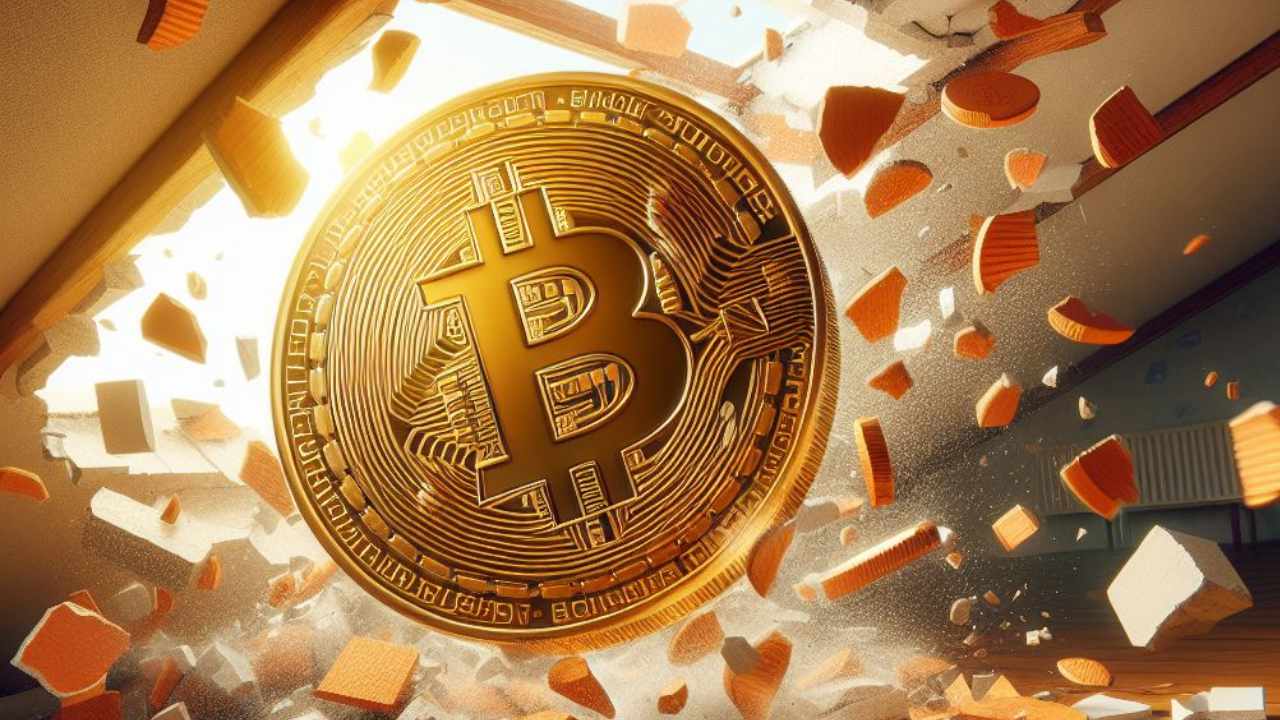
Introduction: The Dawn of a Decentralised Era
In 2009, amidst a global financial crisis, an enigmatic figure under the pseudonym Satoshi Nakamoto introduced the world to Bitcoin—a decentralised, peer-to-peer digital currency designed to challenge the traditional monetary system. Over the past decade and a half, Bitcoin has evolved from a fringe experiment discussed only on cryptography forums to a formidable asset class that commands the attention of governments, financial institutions, and individual investors alike.
At its core, Bitcoin represents more than mere digital money; it embodies an ideology—a defiance of centralised monetary policy and an embrace of financial sovereignty. But to understand its impact, one must look deeper into its origins, mechanics, volatility, and the broader implications for the future of money.
Understanding Bitcoin: What Sets It Apart?
Bitcoin is fundamentally different from fiat currencies issued by central banks. Unlike the dollar or euro, Bitcoin is:
-
Decentralised: No central authority or government controls Bitcoin’s issuance or transactions.
-
Finite: Only 21 million Bitcoins will ever exist, ensuring scarcity akin to precious metals like gold.
-
Immutable: Transactions, once recorded on the blockchain, cannot be altered—preserving transparency and trust.
-
Borderless: It transcends geopolitical boundaries, allowing peer-to-peer transfers without intermediaries.
These features make Bitcoin appealing to a generation that values privacy, autonomy, and freedom from excessive institutional oversight.
The Technology Behind Bitcoin
At the heart of Bitcoin lies blockchain technology—a distributed ledger maintained by a network of computers (nodes) that validate transactions through a process known as mining. Mining, while energy-intensive, ensures that the network remains secure and tamper-resistant.
Each block contains a cryptographic hash of the previous block, a timestamp, and transaction data, forming an unbroken chain that prevents fraud or double spending. The system’s elegance lies in its consensus mechanism, Proof of Work (PoW), which incentivises miners with Bitcoin rewards for expending computational effort to secure the network.
A Brief History: From Obscurity to Mainstream Attention
Bitcoin’s journey has been punctuated by dramatic price surges, equally sharp corrections, and persistent scepticism. In its infancy, Bitcoin traded for mere cents. The now-infamous story of Laszlo Hanyecz spending 10,000 Bitcoins on two pizzas in 2010 serves as a humorous reminder of its humble beginnings.
By 2017, Bitcoin reached its first significant peak, approaching $20,000—a milestone that drew global media attention and sparked a wave of speculative investment. The subsequent bear market was brutal but did not kill the vision. Instead, it matured the ecosystem, fostering innovation and regulatory discourse.
The COVID-19 pandemic era marked another remarkable rally, with institutional investors and even publicly traded companies like Tesla adding Bitcoin to their balance sheets. Suddenly, Bitcoin was no longer just a playground for tech enthusiasts; it became an asset worthy of hedge funds and corporate treasuries.
The Controversies and Criticisms
Despite its allure, Bitcoin is not without detractors. Common criticisms include:
-
Volatility: Bitcoin’s price can swing dramatically, rendering it unreliable as a day-to-day currency.
-
Environmental Impact: The mining process consumes vast amounts of electricity, raising concerns about sustainability.
-
Illicit Use: Its pseudonymous nature has attracted criminal elements, leading to its association with black markets and money laundering.
-
Regulatory Uncertainty: Governments worldwide grapple with how to tax, regulate, or integrate Bitcoin into existing financial frameworks.
These criticisms are valid and continue to fuel debates about Bitcoin’s long-term viability and the need for innovation in mining efficiency and regulatory clarity.
Bitcoin as Digital Gold
Perhaps the most compelling narrative that has emerged is Bitcoin’s role as “digital gold.” Investors increasingly view it as a hedge against inflation, akin to precious metals but more portable and divisible.
Key reasons for this perception include:
-
Scarcity: The 21 million coin limit mirrors gold’s finite supply.
-
Store of Value: Many see Bitcoin as a safeguard against fiat currency devaluation.
-
Independence: It operates outside the traditional banking system, offering an alternative store of wealth.
This narrative has resonated strongly in regions with unstable currencies or oppressive capital controls. For millions, Bitcoin represents an escape valve from economic uncertainty and government overreach.
The Future of Bitcoin: Promise and Peril
As Bitcoin approaches its second decade, questions persist about its future. Will it become a mainstream medium of exchange, or will it remain a speculative store of value? Can it overcome environmental criticisms with advancements like renewable energy mining or alternative consensus mechanisms such as Proof of Stake?
Some governments, like El Salvador, have gone so far as to adopt Bitcoin as legal tender—a bold experiment watched keenly by the global community. Meanwhile, central banks are developing Central Bank Digital Currencies (CBDCs) that, ironically, borrow from Bitcoin’s technological innovations while retaining government control.
Key Takeaways for Investors and Observers
For those contemplating exposure to Bitcoin, a measured approach is paramount. Here are a few guiding principles:
-
Do Your Research: Understand the technology, risks, and market dynamics.
-
Diversify: Never invest more than you can afford to lose; treat Bitcoin as a portion of a broader portfolio.
-
Stay Informed: Regulatory changes, technological upgrades, and macroeconomic shifts can dramatically affect Bitcoin’s trajectory.
-
Think Long-Term: While traders chase short-term profits, many Bitcoin believers advocate holding (or “HODLing”) through cycles of volatility.
Conclusion: A Monetary Revolution in Progress
Bitcoin’s story is far from over. Whether it ultimately transforms global finance or settles into a niche as digital gold, it has already succeeded in sparking a global conversation about money, trust, and freedom.
In an increasingly digitised world, Bitcoin stands as a testament to the power of decentralisation and the human desire for sovereignty over wealth. Love it or loathe it, one thing is certain: Bitcoin has carved its place in the annals of financial history—and its next chapters promise to be just as fascinating.